
F. Javier González González
Veterinario STC Avicultura Nanta
Short memories and resilient viruses: Have we forgotten what we learned?
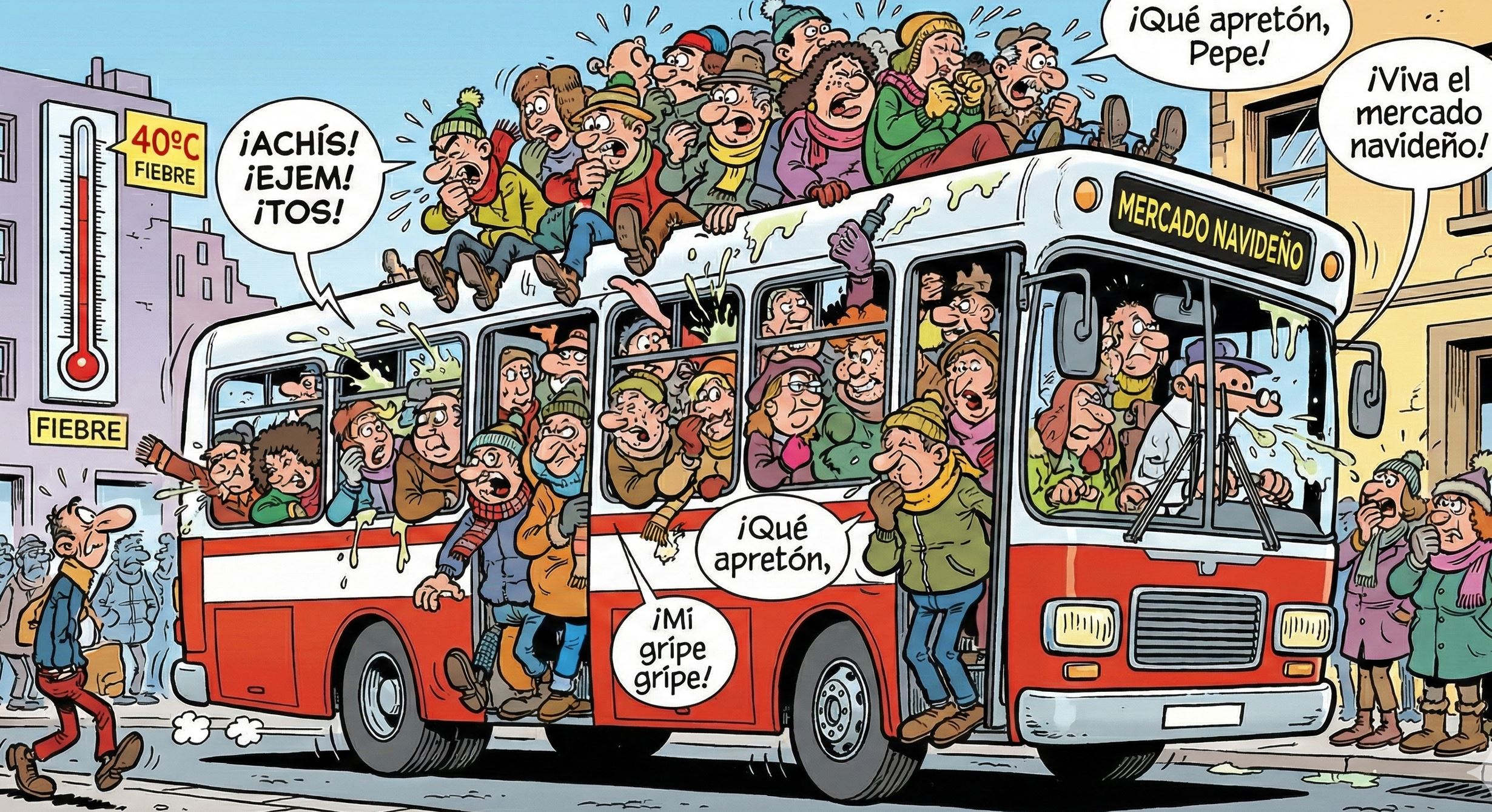
Valladolid, 5 Dec. 2025. Last weekend I went with my family to take in the Christmas atmosphere in the city centre where I live. On the way back, we caught a city bus at around 9 in the evening (rush hour). When we could barely squeeze onto the bus through the crowd — living up to the comparison of being packed in like sardines — not a single face mask in sight (as far as I could see, at least) and bearing in mind that the midday news bulletin had reported the early spread of a highly contagious new strain of flu among people, the first thing that came to mind was the expression made famous by the wizard Gandalf in one of the Lord of the Rings films: “Fools!”
And I was the first fool — since, knowing what I know, I wasn’t wearing a mask either, of course. Everyone’s hands touching the same buttons, gripping the same handrails…, with viruses and bacteria having a field day at this open-bar party. It looked like the opening scene of a disaster movie.
“Health risk is indeed directly proportional to the size of the farm.”
And just a few days ago, I attended a (fantastic, let me say) Avian Influenza Conference in Madrid, attended by more than 90 people (all technicians or poultry farm owners) from all over Spain, gathered in a room (considerably more comfortable than the bus, naturally), but with more physical contact: kisses, hugs and handshakes (as it should be), and also with zero face masks in sight. That very day I decided to write these lines to reflect on why, knowing what we know, and having been through COVID barely 3 years ago — short memories, good grief — we find ourselves once again having to talk about Biosecurity.
And the first reflection should be this: are the measures failing, or are they simply not being applied — or being applied incorrectly?
Allow me to draw on my own experience to highlight the importance this subject has always held in my professional work. The first talk I gave on Biosecurity was in 1994, at the Salamanca Agricultural Fair: “Biosecurity measures applied to rabbit farms”. A great deal of water has flowed under the bridge since then, and we are still preaching the same message — with complete conviction on my part. I believe in Biosecurity and consider it the best and most intelligent way of combating infectious and contagious diseases.
So, if the core concept of Biosecurity is sound and everyone agrees to “buy into” this idea, where are we going wrong?
“On more than one visit to facilities housing many thousands of hens, walking through the houses has felt like attending a village fair.”
This question leads me to another personal reflection I have shared with many farmers throughout my career: Who is the better vet?:
- The one who visits a farm with a health problem, prescribes a product and manages to get the animals cured?
- Or the one who visits the same farm and tells the farmer that he needs footbaths, that he needs to set up a changing area, that he needs to treat his water supply, that he needs to wash down, that he needs to disinfect, that he needs to keep records of what he does, that he needs to, that he needs to…?
Both approaches are of course compatible, but I have no doubt which of the two the farmer would invite to lunch first.
There are many — countless — biosecurity measures, but I am clear that the number of measures is not directly proportional to the overall effectiveness of Biosecurity. I would even say it is the opposite. Despite the fact that surveys and audits clearly tend to reward quantity far above quality, the practical reality is that the fewer measures that need to be applied, the more likely they are to be carried out properly.
What matters most is making it clear that the objective is to prevent potential pathogens from entering our farm, and that if they do enter, they do not spread among our animals — bearing in mind that these pathogens are highly diverse, extremely small and, like us, survivors of a thousand past challenges and therefore resistant, resilient and adaptable.

Therefore, the more barriers we put in place against this potential entry, the better. Birds and other domestic and wild animals, people, equipment, vehicles, etc. But they must be real barriers. Torn bird netting, cats as a means of rodent control, permanently open doors, poorly maintained footbaths and wheel dips — none of these will do. In this regard, I would like to highlight something based — naturally — on my own experience. The larger the farm (and I am referring to the production unit), the harder it is to control entry points.
“The fewer measures that need to be applied, the more likely they are to be carried out properly.”
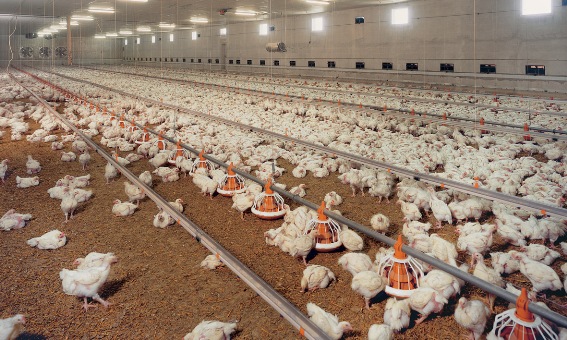
On more than one visit to facilities housing many thousands of hens, walking through the houses has felt like attending a village fair: maintenance technicians and vehicles parked right next to the houses, houses of 100,000 hens with doors wide open (when they exist at all), interconnected by a side corridor with people wandering back and forth and entering the houses without even changing their footwear or stepping through the footbaths (when they exist), staff meeting and socialising in the coffee room or canteen, feed lorries, egg tray deliveries, commercial representatives, installation company personnel carrying out repairs, and so on and so forth. It is true that control is much easier on smaller farms, but you will agree with me that health risk is indeed directly proportional to the size of the farm. In any case: few measures, simple to apply, and properly maintained.
Another example that is beginning to exasperate me is that, on numerous occasions, we have found that no dedicated changing area for clothing and/or footwear has been established. The distinction between “clean zone” (inside the farm) and “dirty zone” (outside the farm) remains unclear. A transition zone must be designated for making this change. It is not the farm storeroom, the corridor, the office, or the path around the house. It seems straightforward, but…

It cannot be that straightforward, because if it were I would not be writing these lines. The secret was shared with me some years ago by my colleague and friend — now happily retired — Ricardo Serrano: Biosecurity is a matter of culture, one might almost say of religion.
For it to work, everyone involved (starting with the owners) must believe that what they are doing actually serves a purpose, and not do it simply because they are told to. No small thing: a matter of culture!
And how is this culture developed? This is not straightforward — I am sorry to say — but it requires leading by word and by example, repeating things many times (the what and the why), patience and collaboration with experts — who do exist. And all of this in whatever languages may be necessary given the circumstances of each farm. As I say, it is not simple.
“Each farm must develop its own Biosecurity plan; copy-and-paste solutions simply will not do.”
This is precisely why each farm, with its particular characteristics of every kind (construction, installations, production type, staff, etc.), must develop its own Biosecurity plan (copy-and-paste solutions simply will not do), analysing its critical control points and implementing the appropriate solutions. I, right now, with the heightened awareness that avian influenza and African swine fever are generating, would seize this moment to do it and do it properly. I am addressing farm vets and owners directly: this should be your priority — trying to seal every possible entry point (whoever said it was easy?).
I will not go on much longer. To summarise: I am a fervent advocate of Biosecurity, I am a “believer”, and I am fully convinced that, together with vaccines, it will be the essential component of disease control in the future. “The secret” lies in fewer audits and surveys, and in establishing measures that are simple and that must become part of the farm’s culture; and developing that culture is a daily task in which all those involved must each play their part.
F. Javier González González
Veterinario STC Nanta
See other articles by the author
OPINION articles published in NeXusAvicultura are always signed and reflect the personal views of the author, not necessarily those of the organisation or company they work for, nor those of this poultry media outlet.
Want to stay one step ahead in poultry production?
Subscribe free to our eNewsletter and receive a weekly selection
of the best information to anticipate trends, stay up to date and develop as a poultry industry professional.
NeXusAvicultura: Vision, Expertise, Quality and Context.