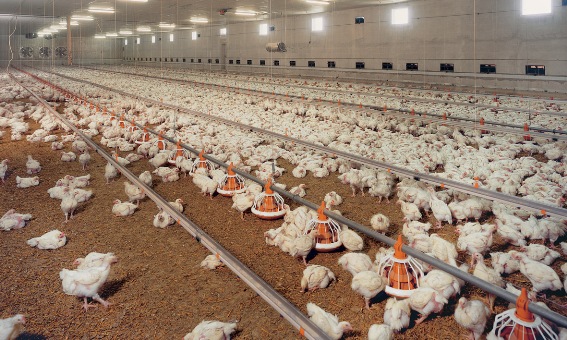

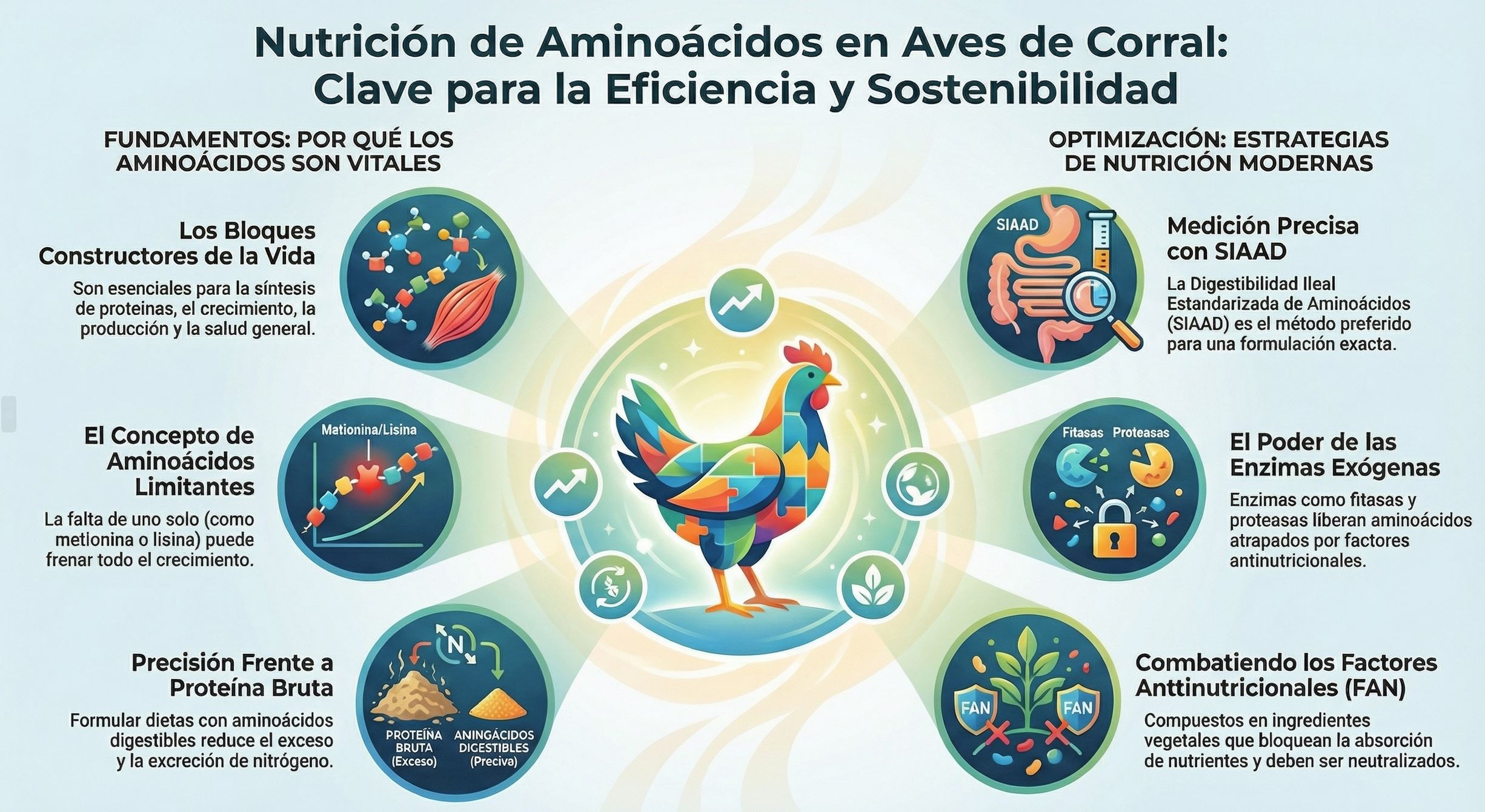
The role of amino acids (AA) in nutrition is fundamental to the global poultry industry, which is a vital contributor to world animal protein production, supplying meat and eggs as essential sources of high-quality nutrients. AAs are vital nutrients that support growth, meat and egg production, feed efficiency and the overall health of poultry. In modern diets, the focus has shifted from crude protein (CP) to digestible AAs, enabling more precise nutrition and a significant reduction in nitrogen (N) excretion. This review explores recent advances in AA nutrition, digestibility tools, formulation challenges and strategies for achieving more efficient, sustainable and environmentally responsible poultry production.
Role and classification of amino acids in poultry production
AAs are categorised as essential (EAAs) and non-essential (NEAAs), each with distinct functions and dietary requirements. Essential amino acids (EAAs), which the body cannot synthesise in sufficient quantities and must be supplied through the diet, include lysine, methionine, tryptophan, threonine, isoleucine, arginine, leucine, histidine, phenylalanine and valine. Non-essential AAs, such as glycine, serine, proline and others, are crucial for metabolic regulation, tissue development and overall performance.
Beyond their structural role in protein synthesis, AAs influence a range of essential physiological processes. For example, supplementation with key EAAs such as methionine, tryptophan, lysine, threonine, glycine and proline has been associated with improved growth, egg quality and immune function. Tryptophan, in particular, modulates stress responses, supports neuroendocrine function and enhances immune organ development in broilers.
Limiting amino acids and their specific roles
In plant-based poultry diets, methionine, lysine, threonine, tryptophan and valine are generally considered the primary limiting AAs.
- Methionine: Typically the first limiting AA in corn-soybean meal (C-SBM)-based diets. It is vital for protein synthesis, acts as a methyl group donor, and is a precursor of cysteine and carnitine. Methionine and cysteine (sulphur-containing AAs) are crucial for antioxidant defence through glutathione synthesis and feather development. The primary synthetic sources are DL-methionine (DLM) and DL-2-hydroxy-4-methylthiobutanoic acid (DL-OH-Met), with variable bioefficacies (liquid MHA-FA typically 70–75% of the efficacy of powdered DLM on an equimolar basis) due to differences in intestinal absorption mechanisms. Deficiency leads to reduced feed intake, poor feed conversion and plumage problems.
- Lysine: Widely recognised as the second limiting AA in corn-soybean meal (C-SBM) diets. It is the reference AA in the ideal protein concept for determining the relative requirements of other AAs, ensuring a balanced profile and minimising N excretion. It is critical for protein synthesis, collagen formation and muscle development in broilers. A lysine deficiency can reduce body weight, feed efficiency and meat yield.
- Threonine: An indispensable AA, recognised as the third limiting AA. It plays a key role in maintaining intestinal immune function and is a major component of mucin, the glycoprotein that protects the intestinal lining and maintains its integrity. Its role in mucin synthesis significantly affects endogenous AA secretions, impacting digestibility accuracy.
- Tryptophan: An essential AA and the least abundant among the limiting AAs in laying hens. It is a precursor of serotonin and melatonin, regulating mood, appetite, stress response and behaviour, and is crucial for protein synthesis and egg production. Inadequate levels can lead to reduced growth, poor feed efficiency, feather pecking and cannibalism.

Challenges in optimising amino acid nutrition
Optimising AA nutrition faces persistent challenges, including variability in requirements across species and production stages. The bioavailability of AAs is affected by factors such as feed processing methods and the presence of antinutritional factors (ANFs).
- Environmental impact: Excessive N excretion (derived from unutilised AAs) is a major environmental concern, contributing to ammonia emissions, acidification and water contamination.
- Antinutritional factors (ANFs): Compounds such as trypsin inhibitors (TIs) in soybean meal, beta-glucans in barley and oats, and glucosinolates in canola/rapeseed meal interfere with nutrient absorption and digestibility. TIs, for example, form stable complexes with trypsin, blocking its activity and causing hypersecretion of pancreatic enzymes and endogenous AA losses. Beta-glucans increase digesta viscosity, limiting enzyme access and slowing gastric emptying. Appropriate thermal processing (such as controlled heating) is the most effective strategy for mitigating TIs.
- Modern challenges: Genetic selection for rapid growth has led to metabolic disorders (myopathies such as woody breast or white striping) that alter AA metabolism. Furthermore, the ban on antibiotic growth promoters (AGPs) has intensified the need for nutritional alternatives, including precision AA diets, to maintain gut health and performance.
Coccidiosis and other enteric health challenges can drastically reduce the apparent digestibility of all AAs, highlighting the interconnection between microbiota health and nutrient utilisation efficiency
Advances in digestibility assessment and utilisation
Accurate assessment of AA availability is critical. Standardised ileal amino acid digestibility (SIAAD) is the preferred measure for estimating bioavailability in poultry. Unlike apparent ileal digestibility (AID), SIAAD corrects ileal AA output for basal ileal endogenous AA losses (BIEAAL).
- SIAAD vs. AID and TID: Apparent ileal digestibility (AID) includes both dietary and basal endogenous losses, often underestimating digestibility and lacking additivity in mixed formulations. SIAAD corrects only for BIEAAL (inevitable losses independent of diet type, influenced by feed intake) to improve precision and additivity. True ileal digestibility (TID) would correct for all endogenous losses (both basal and diet-specific losses induced by fibre or ANFs), but quantifying specific losses remains impractical for routine formulation.
- Basal endogenous losses (BIEAAL): These losses arise from normal physiological processes (digestive enzymes, bile acids, mucin, sloughed intestinal cells). The most widely used method for their determination is the nitrogen-free diet (NFD).
- Specific endogenous losses (SEL): These are additional losses directly induced by dietary components, such as high fibre content, phytate or TIs.
Factors influencing digestibility (SIAAD)
The accuracy of SIAAD is affected by multiple factors:
- Feed processing: Thermal processing serves a dual function: it inactivates heat-labile ANFs (such as TIs), but excessive heat (as in inappropriate pelleting or extrusion) can cause protein damage through Maillard reactions and AA racemisation, reducing availability, particularly of lysine.
- Ingredient type: High-fibre ingredients or certain minerals (e.g., excess calcium) stimulate mucin secretion and epithelial turnover, increasing endogenous losses. Glutamic acid, aspartic acid, threonine and glycine are dominant constituents of endogenous secretions (mucin and bile).
- Age: Ileal endogenous AA flow and SIAAD coefficients are inversely related to age. Young chicks exhibit significantly higher IEAA flow than older birds, attributed to greater mucin secretion and less developed intestinal tract.
- Gut health and microbiota: Dysbiosis or enteric challenges such as coccidiosis (e.g. Eimeria spp.) compromise intestinal integrity, significantly reducing the AID of all measured AAs. The gut microbiota plays a crucial role in AA metabolism, synthesising certain EAAs and fermenting undigested proteins.

Strategies to improve amino acid utilisation: enzymes and technology
1. Exogenous enzymes
Exogenous enzyme supplementation is a key strategy for improving nutrient utilisation and AA digestibility, as poultry lack endogenous enzymes to degrade non-starch polysaccharides (NSPs) and phytate.
- Phytase: Widely used to hydrolyse phytate, releasing inorganic phosphorus (P) and AAs that were previously bound in phytate-protein complexes. Phytase also mitigates the adverse effects of phytic acid, which increases endogenous AA losses and inhibits endogenous protease activity.
- Protease: Catalyses the cleavage of peptide bonds, converting complex proteins into smaller peptides and free AAs, facilitating absorption and degrading proteinaceous ANFs. Protease supplementation has been shown to improve the digestibility of crude protein and both essential and non-essential AAs.
- Carbohydrase (xylanase and beta-glucanase): These enzymes degrade NSPs (arabinoxylans in wheat and rye; beta-glucans in barley and oats). They reduce digesta viscosity, which facilitates enzyme-substrate contact, nutrient diffusion and improves AA digestibility.
- Synergistic effect: The combination of enzymes can have a greater impact than the sum of their individual effects. Co-supplementation of xylanase and phytase in wheat-soybean meal diets, for example, significantly increased apparent metabolisable energy (AME) and ileal AA digestibility, surpassing the improvements achieved by each enzyme separately.
2. Technology and precision strategies
- In ovo feeding: Delivers essential nutrients (including AAs such as cysteine and lysine) directly to the developing embryo prior to hatch, improving early nutrient availability and post-hatch performance, particularly under heat stress.
- Synthetic and encapsulated AAs: Synthetic AAs (SAAs), such as DL-methionine and L-lysine, are used to balance reduced crude protein diets, decreasing the need for protein-rich ingredients and therefore N excretion. Innovative forms, such as chelated or encapsulated AAs, are designed to improve bioavailability and metabolic efficiency.
- Precision nutrition and dynamic modelling: Factorial and dynamic models estimate AA requirements with greater accuracy by dividing needs into maintenance and growth components, and by integrating biological and environmental variables (age, weight, sex). Phase feeding (gradual diet change) reduces AA oversupply, optimising N use and minimising excretion.
- Single-cell proteins (SCP) and alternatives: SCPs (derived from microorganisms such as yeasts and bacteria) offer a high AA content and are considered a sustainable protein source. Other alternatives, such as insect meal (e.g., Hermetia illucens), provide highly digestible essential AAs that closely resemble the profile of fishmeal.
Environmental impact and sustainability
Precision amino acid (AA) formulation is a key strategy for improving environmental sustainability. Reducing dietary crude protein (CP), balanced with synthetic AAs (SAAs), can effectively reduce N excretion by up to 10.4% for every 1% reduction in crude protein, without compromising performance. Optimising AA nutrition, using standardised ileal amino acid digestibility (SIAAD) for precise formulation and employing enzymes and SAAs, is essential for economic viability and sustainability, by improving feed efficiency and mitigating the environmental impact associated with manure management and ammonia emissions.
Source:
-. Amino Acid Nutrition in Poultry: A Review. Alabi, Taiwo, and Sunday Adedokun. 2025. Animals 15: 3323. doi:10.3390/ani15223323.
Further reading:
-. POULTRY NUTRITION at NeXusAvicultura
Want to stay one step ahead in poultry production?
Subscribe free to our eNewsletter and receive a weekly selection
of the best information to anticipate trends, stay up to date and grow as a poultry industry professional.
NeXusAvicultura: Vision, Expertise, Quality and Context.